

Upcycling vs Recycling Clothes: What Is the Difference?
Upcycling and recycling both give old clothes a second life, but they work in very different ways. Recycling breaks a garment down into fibre or raw material, then makes something new from it. Upcycling keeps the fabric as fabric, and cuts and stitches it into a new product, often one worth more than the original. Here is how the two compare, where downcycling fits in, and how to choose the right one for your old clothes.
Key Takeaways
- Recycling breaks clothes down into fibre; upcycling remakes the fabric into a new product without breaking it down.
- Downcycling turns textiles into lower-value uses, such as padding, insulation or cleaning rags.
- Very little old clothing is recycled into new clothing today, so wearing, repairing and upcycling come first.
- Use upcycling for clothes with good fabric or sentimental value, and recycling for clothes that are too worn to remake.
Why the difference matters
Most clothing still ends up as waste. The Ellen MacArthur Foundation reports that every second, one truckload of clothing is landfilled or burned, and that clothing use has declined by almost 40% (Ellen MacArthur Foundation, Fashion and the circular economy, retrieved 2026-10-23). The same foundation notes that less than 1% of old clothing goes on to be used to make new clothes (Ellen MacArthur Foundation, Who should be responsible for recycling clothes?, retrieved 2026-10-23).
In India, Fashion for Good's Wealth in Waste study (July 2022) estimated up to about 7,800 kilotonnes of textile waste a year, with about 51% coming from consumers (Just Style, reporting the Fashion for Good study, 2022). With so little clothing recycled back into clothing, the order in which you try each option makes a real difference.
What is recycling clothes?
Recycling breaks a garment down so its material can be used again. In mechanical recycling, fabric is shredded back into fibre, which can be spun into new yarn. In chemical recycling, the fibres are broken down further into raw materials. Either way, the original garment, its shape, seams and details, is gone.
Recycling is useful for clothes that nobody can wear or remake. Its limits are that it needs collection, sorting and processing, and mechanical recycling shortens fibres such as cotton, so recycled cotton is often blended with new fibre to make it strong enough.
What is upcycling clothes?
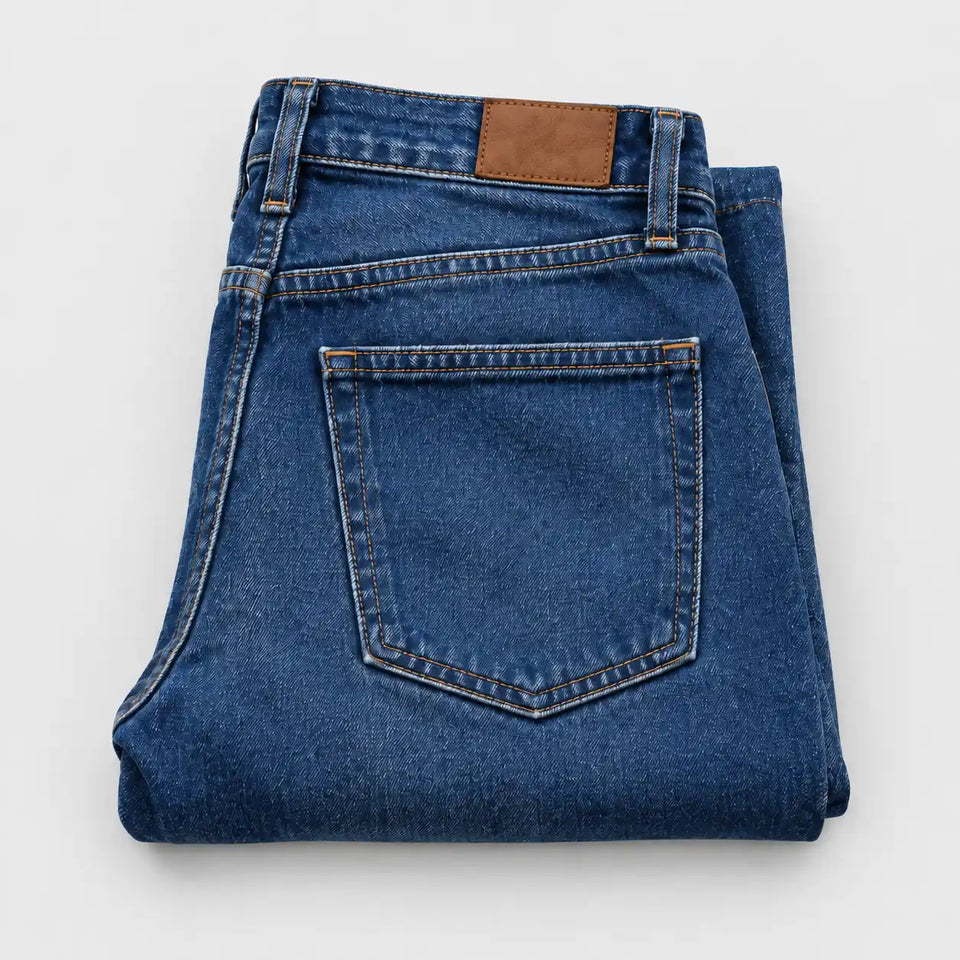
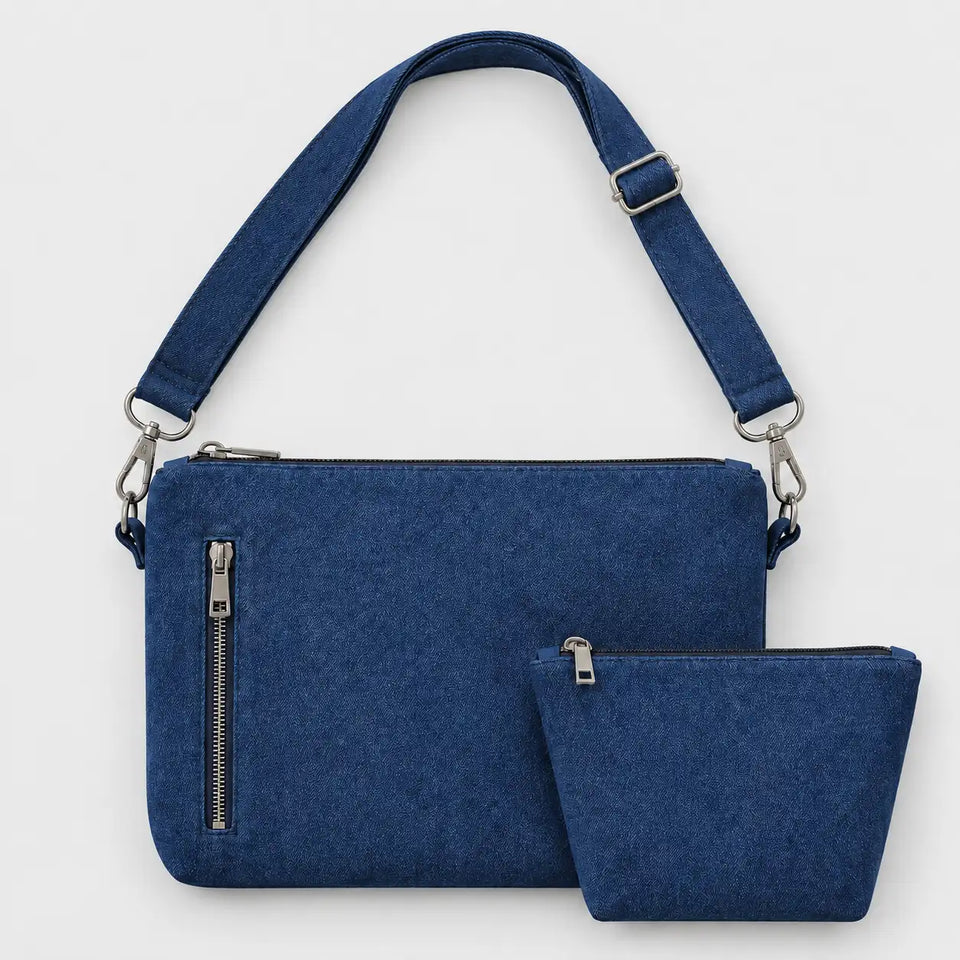
Upcycling keeps the fabric as it is and remakes it into a new product of equal or higher value. Old jeans become a bag, a shirt becomes a cushion cover, and a sari becomes a dress. The fabric is cut, reinforced and stitched, but it is never broken down into fibre.
Because the fabric stays whole, upcycling keeps the things people love about their clothes: the fades, pockets, prints and memories. It needs skilled hand work, so each piece takes time, and no two pieces look exactly the same.
What is downcycling?
Downcycling turns a material into something of lower value or quality. For textiles, that usually means shredding clothes into stuffing, padding or insulation, or cutting them into cleaning rags. It keeps material out of landfill for a while, but the fabric cannot easily be used for clothing again.
Upcycling vs recycling vs downcycling at a glance
| Upcycling | Recycling | Downcycling | |
|---|---|---|---|
| What happens to the fabric | Kept whole and remade | Broken down into fibre or raw material | Shredded or cut up |
| Result | A new product of equal or higher value | New yarn, fabric or material | Padding, insulation or rags |
| Keeps the look and details | Yes | No | No |
| Processing needed | Hand cutting and stitching | Collection, sorting and industrial processing | Shredding or cutting |
| Best for | Good fabric, or clothes with sentimental value | Clothes too worn to remake | Scraps and offcuts |
Which should you choose?
Go through the options in this order, and stop at the first one that works for the garment:
- Keep wearing it. Repair small damage at a local tailor.
- Reuse it. Pass it on, donate it or sell it if it is still wearable.
- Upcycle it. Remake it into something you will use, especially if it has good fabric or memories.
- Recycle it. Send it for textile recycling when it is too worn to remake.
- Downcycle the scraps. Small offcuts can still become padding or rags.
Each step down this list uses more processing and keeps less of what made the garment useful. That is why recycling is the right choice for worn-out clothes, but a poor choice for a pair of jeans that could still become a bag. For more ideas, read what to do with old jeans in India.
How FFM upcycles old jeans
At FFM, we upcycle old jeans into handmade bags. You choose a design, we pick up your jeans free from your door anywhere in India, and our makers in Delhi turn them into your bag in about 14 days. One pair of jeans makes most of our bags. See how many jeans each bag needs.
We also follow the order above. We use the parts of your jeans that work best for your bag, and the leftover denim goes to our recycling partners, who give it another use in materials such as padding. See how it works, or browse bags made from old jeans.
Frequently asked questions
Is upcycling better than recycling?
For clothes with usable fabric, usually yes, because upcycling keeps the fabric whole and needs less processing. For clothes that are too worn to remake, recycling is the better choice.
Are upcycled products durable?
They can be, when they are made well. Look for reinforcement, a proper lining and strong stitching. FFM bags are reinforced and lined, and we offer workmanship repairs for life: if a seam, strap, lining or zip fails because of how we made it, we repair it free.
Can torn or faded clothes be upcycled?
Often, yes. Fades and small tears can become part of the design. Very thin or badly damaged areas are cut around, and the rest of the fabric is used.
What is the difference between upcycling and downcycling?
Upcycling makes a product of equal or higher value from the old fabric. Downcycling makes a lower-value product, such as padding or rags, usually by shredding or cutting the fabric.
Sources
- Ellen MacArthur Foundation, Fashion and the circular economy, retrieved 2026-10-23.
- Ellen MacArthur Foundation, Who should be responsible for recycling clothes?, retrieved 2026-10-23.
- Fashion for Good, Wealth in Waste (Sorting for Circularity India), July 2022, as reported by Just Style.